Showing posts with label syria. Show all posts

Wednesday, October 5, 2011

Russia, China Veto U.N. Resolution to Condemn Syria for Crackdown

From: foxnews


Russia and China vetoed a U.N. Security Council resolution Tuesday that threatened sanctions against Syria if it didn't immediately halt its military crackdown against civilians.

European members of the Security Council tried to avoid a veto by watering down the language on sanctions three times, but they failed.

The vote was 9-2 with four abstentions -- India, South Africa, Brazil and Lebanon.

Russia's U.N. Ambassador Vitaly Churkin told the council after the vote that his country did not support Syrian President Bashar Assad's regime or the violence but opposed the resolution because it was "based on a philosophy of confrontation," contained "an ultimatum of sanctions," and was against a peaceful settlement of a crisis.

China's Ambassador Li Bandong said his country is concerned about the ongoing violence and wants to see speedy reforms but opposed the resolution because "sanctions, or threat of sanctions, do not help the sitiuation in Syria but rather complicates the situation."

France's U.N. Ambassador Gerard Araud denounced the veto, saying it "goes against the sense of history that is under way in the region."

"I would like to commend all of those who fight against the bloodthirsty crackdown in Syria," he said.

The Security Council has been divided over a response to the violence, with Western nations and some supporters in Africa and Latin America pressing for tough action against Syria while Russia, China and other members opposed even mentioning the threat of sanctions.

If the resolution had been approved, it would have been the first by the Security Council against Syria since Assad's military began its crackdown against protesters in mid-March.


Read more: http://www.foxnews.com/world/2011/10/04/russia-china-veto-un-resolution-to-condemn-syria/?utm_source=feedburner&utm_medium=feed&utm_campaign=Feed%3A+foxnews%2Fworld+%28Internal+-+World+Latest+-+Text%29#ixzz1ZrgvlInb

Tuesday, October 4, 2011

Dozens of Arrests Are Reported as Syrian Troops Retake Town

BEIRUT, Lebanon — The Syrian government said Monday that it had arrested dozens of people in a central Syrian region that has become a flash point in fighting between defectors and security forces waging a brutal crackdown on a six-month uprising.

The military said over the weekend that it had retaken Rastan, a restive town on the corridor between the strategic locales of Homs and Hama, two of Syria’s largest cities. It reportedly deployed more forces on Monday in Talbiseh, near Homs, another town that has defied government authority for months in a revolt that has shaken the four-decade rule of the Assad family. Since the summer, residents say, both Rastan and Talbiseh have appeared virtually occupied, with tanks and soldiers guarding the towns’ entrances.

“The defectors were the main reason behind the war on Rastan,” said a resident there who gave his name as Hassan. “Only women were allowed to leave their homes. The men were detained immediately.” Though he was unable to give an estimate on the number detained, the Syrian news agency SANA said arrests numbered “in the dozens.”

The Syrian uprising, which began with largely peaceful protests in the southern, drought-stricken Houran region in March, seems to have entered a new stage. While protests remain largely peaceful, armed opponents of the government are fighting in Homs, Syria’s third-largest city. American officials estimate military defectors to number in the thousands, and while many have simply sought refuge, others have joined the uprising, especially in places like Homs, Rastan and Talbiseh.

Encouraged by the United States, Turkey and Qatar, the opposition abroad has sought to unify its ranks, most recently with a meeting in Istanbul on Sunday, hoping to fashion itself as a possible transition in the aftermath of a government collapse. But diplomats and activists concede that it remains divided over agendas and ideologies.

The state news agency said the military also confiscated weapons, ammunition and explosives in Rastan on Monday. Since the uprising’s start, the government has cast the opposition as an armed insurgency, driven by militant Islamists — by all other accounts, a vast exaggeration. But reports have grown of assassinations, and some residents have worried about growing strife between Syria’s Sunni Muslim majority and the Alawite minority. President Bashar al-Assad and his top officials are Alawite.

The authorities said that Sariya Hassoun, the son of a leading Sunni cleric allied with the government, was killed Sunday in the restive northwest province of Idlib.

Tuesday, June 28, 2011

Iran Threatens Turkey, Reveals Missile Silos

Soon those silos will contain nuclear-tipped missiles.
 
Iranian regime-run site Entekhab reports:
According to sources close to the Iranian regime, who were interviewed by Al-Manar [Hezbollah affiliated TV run out of Lebanon], Iran’s resolve is as strong as a rock and defending Damascus is as much of a priority as defending Beirut and Tehran. … Tehran does not meddle in any of the events taking place in Syria.
Quoting the Iraqi daily newspaper Al-Akhbar, Entekhab wrote:
Tehran has threatened Turkey by announcing that Iran will bomb every single NATO and U.S. base in Turkey, should they allow any attacks on Syria to be launched from within Turkish soil. The Iranian regime believes protecting Syria to be as important as protecting both Lebanon and Iran.
Though Iranian regime officials have claimed that this threat has not affected Turkish-Iranian relations, there are reports that privately a number of Turkish officials are extremely incensed by the Iranian regime’s belligerence. So far, neither Iran nor Turkey has publicly commented on this matter.

I revealed on May 9 that Ayatollah Khamenei held a covert meeting in Tehran with commanders of the Revolutionary Guards, representatives of the Syrian embassy, members of Hezbollah, and leaders of the Sadr movement. There, he demanded that all operational and logistic forces be applied in order to stamp out the blaze of sedition in Syria and to destroy those who are enemies of God in that country. The Iranian supreme leader called the Syrian protesters an enemy of God who are plotting against Islam. One week after that meeting, reports from sources within Iran indicated a dispatch of Guard forces to Damascus via four planes filled with guns, ammunition, and other military equipment.

The Iranian leaders are extremely worried about the situation in Syria as the fall of the Assad government will be a big blow to the Islamic regime in Tehran. Syria has provided the gateway for the expansion of the Iranian terror networks needed to influence the events in the Middle East, and a change in Syria could mean the start of the demise of radicals in Iran.

read more: http://pajamasmedia.com/blog/iran-threatens-turkey-reveals-missile-silos/

Saturday, June 25, 2011

Analysis: Lebanon's Hezbollah may fight Israel to relieve Syria

By Mariam Karouny

BEIRUT (Reuters) - Lebanon's Hezbollah militant group is preparing for a possible war with Israel to relieve perceived Western pressure to topple Syrian President Bashar al-Assad, its guardian ally, sources close to the movement say.

The radical Shi'ite group, which has a powerful militia armed by Damascus and Iran, is watching the unrest in neighboring Syria with alarm and is determined to prevent the West from exploiting popular protests to bring down Assad.
Hezbollah supported pro-democracy movements that toppled Western-backed leaders in Tunisia and Egypt, but officials say it will not stand idly by as international pressure mounts on Assad to yield to protesters.

It is committed to do whatever it takes politically to help deflect what it sees as a foreign campaign against Damascus, but it is also readying for a possible war with Israel if Assad is weakened.

"Hezbollah will never intervene in Syria. This is an internal issue for President Bashar to tackle. But when it sees the West gearing up to bring him down, it will not just watch," a Lebanese official close to the group's thinking told Reuters.

"This is a battle for existence for the group and it is time to return the favor (of Syria's support). It will do that by fending off some of the international pressure," he added.

The militant group, established nearly 30 years ago to confront Israel's occupation of south Lebanon, fought an inconclusive 34-day war with Israel in 2006.

Hezbollah and Syria have both denied that the group has sent fighters to support a military crackdown on the wave of protests against Assad's rule.

read more: http://ca.reuters.com/article/topNews/idCATRE75L3S320110622

Sunday, June 12, 2011

Excerpts from IAEA report claim Deir al-Zor site tied to other secret hubs, Syria took extensive measures to hide facilities, 'Al-Hayat' reports.

'Syria's nuclear plant linked to 3 other facilities'


Tuesday, June 7, 2011

Syria vows 'decisive' response in Jisr al-Shughour

Mobile phone video of recent funeral procession in Jisr al-Shughour A crackdown began in Jisr al-Shughour following protests after Friday prayers
Syria's government has vowed to deal "decisively" with the gunmen blamed for the deaths of 120 security personnel in the northern town of Jisr al-Shughour.

Interior Minister Ibrahim Shaar said it would "not be silent about any armed attack that targets the security of the state and its citizens."

Residents later warned that there would be massive bloodshed if the authorities attempted to restore control by force.


read more: http://www.bbc.co.uk/news/world-middle-east-13677200?utm_source=twitterfeed&utm_medium=twitter

'Gay Girl in Damascus' Allegedly Kidnapped

 
As the anti-government uprising in Syria has unfolded, Syrian-American blogger Amina Abdallah has attracted readers and been noticed by The Washington Post, CNNTime,and The Guardian for her musings on the protest movement and what it's like to be gay in Syria. But her blog--A Gay Girl in Damascus--broached a very different topic today: Someone introducing herself as Abdallah's cousin wrote that Abdallah was seized by three armed men while on her way to meet with protest organizers.

The cousin adds that while the family suspects Abdallah was seized by Syrian security forces, all that's known right now is that she's missing. A Facebook page has quickly sprouted up for Abdallah, a dual citizen who was born in Virginia to an American mother and a Syrian father and, at six months, moved to Syria, where she has relatives in the government and the Muslim Brotherhood (the photo above comes from Facebook, though we can't confirm its authenticity). On the Facebook page, there's discussion of Abdallah's name (Amina Abdallah or Amina Arraf?) and how to contact U.S. representatives from Virginia to facilitate Abdallah's release.

read more: http://www.theatlanticwire.com/global/2011/06/gay-girl-damascus-allegedly-kidnapped/38556/

Netanyahu accuses Syria of abetting border clash

JERUSALEM — A day after Israel used lethal gunfire to repel protesters from Syria who tried to breach the frontier with the occupied Golan Heights, Prime Minister Binyamin Netanyahu defended the army’s conduct and suggested that the Syrian government had used the protest to deflect attention from its own deadly crackdown on a popular uprising.

Syria said that 23 people were killed by Israeli fire during Sunday’s border confrontation, including a woman and a child, and it accused Israel of “flagrant aggression” against unarmed civilians.


read more: http://www.washingtonpost.com/world/middle-east/netanyahu-accuses-syria-of-abetting-border-clash/2011/06/06/AGYCeaKH_story.html?wprss=rss_world

Sunday, June 5, 2011

Arabs prepare to march on Israel's borders

 http://www.israeltoday.co.il/tabid/178/nid/22813/language/en-US/Default.aspx


Arabs prepare to march on Israel's borders
The Israeli army this week was busy readying itself for the next pan-Arab assault on Israel's borders, scheduled for Sunday.

Two weeks ago, Arabs from Lebanon, Syria and Gaza marched on Israel's borders in an effort to infiltrate the Jewish state en masse. They were marking Nakba Day - the Day of Catastrophe when Israel was reborn as a nation-state.

The Nakba Day demonstrations saw at least 100 Syrians cross into the Golan Heights, where many clashed with Israeli soldiers.

The upcoming demonstration will mark "Naksa Day" - the Day of the Setback, the anniversary of the start of the Six Day War in 1967. Demonstrations are planned for Sunday and Tuesday. Sunday, which is the actual anniversary of the war, is expected to see the largest confrontations.

Israeli forces are determined that there will be no border breaches this time, but that the Arabs will also not score a public relations victory by baiting the IDF into killing demonstrators.

Israeli soldiers have been ordered to first shout for the demonstrators to halt if they approach the border. If the demonstrators continue to advance, the Israelis will fire warning shots in the air. If that doesn't work, the soldiers are authorized to direct non-lethal fire at the demonstrators' lower extremities.

Reports out of Lebanon suggest that some 100,000 may participate in Sunday's march. But the Lebanese army has also suggested it will not allow any of them to reach the border.

US Concerned Over Syrian Internet Cut

http://www.israelnationalnews.com/News/Flash.aspx/212116

The United States expressed “deep concern” over Syria's cutting of the internet over the weekend. The Syrian government blocked internet access to at least two thirds of the country on Saturday, apparently in the hope that protesters demanding the resignation of Bashar al-Assad would not be able to use social media sites to organize protests.

“We condemn any effort to suppress the Syrian people's exercise of their rights to free expression, assembly, and association,' U.S. Secretary of State Hilary Clinton said in a statement. “The Syrian government must understand that attempting to silence its population cannot prevent the transition currently taking place. We believe that even in the face of significant obstacles, the Syrian people will -- and should -- find a way to make their voices heard,” she added.

Saturday, June 4, 2011

Lebanese army won’t allow a repeat of the al Nakba day, report

http://www.yalibnan.com/2011/06/02/lebanese-army-wont-allow-a-repeat-of-the-al-nakba-day-report/


May 15 was the al Nakba day and June 5 is
the al Naksa day.

Fatah leader in Lebanon Munir Maqdah said on Wednesday that all Palestinians including Fatah and Hamas groups will take part in the Naksa Day rally scheduled for June 5.

“All Palestinian factions will participate in the event, including institutions from Lebanon’s civil society.”
He told the Central News Agency.

“The May 15 clashes are a ball of fire that will keep on growing until it burns the occupier until the Palestinians are granted their right to return to their homeland,” he added.

Palestinian sources told the news agency that the demonstrators are planning on marching to the Lebanese-Israeli border on June 5, where they will set up tents at Maroun al-Ras and at the Khiyam prison.

They added that preparations and contacts are underway with Lebanese authorities, Hezbollah, and other parties in order to stage Sunday’s rally.

Ten protesters were killed and 112 were wounded in a shooting incident at the Lebanese-Israeli border where Palestinians were demonstrating on Sunday May 15 , security sources said.

June 5 marks the Naksa day the day of defeat . It is the day when the Arab armies were defeated by Israeli in the 1967 six day war . Syria lost the Golan Heights, the Palestinians lost the west bank and Gaza and Egypt lost the Sinai desert.

Security sources told Kuwaiti newspaper al Anbaa that the Lebanese army won’t allow a repeat of the al Nakba day protests that took place in Maroun al Rass. The sources stressed that the army will not allow Israel any more excuses for more killings

One source told the daily that the army recently succeeded in foiling an attempt to fire a rocket towards Israel … the person was detained just before firing the rocket.

Sunday, May 29, 2011

Syrian rebels asked Israel for help


Wednesday, May 25, 2011

Bahrain's Voiceless: How al-Jazeera's Coverage of the Arab Spring Is Uneven


A couple of weeks ago, the Qatari English language daily the Peninsula ran the provocative headline, “Why Are We So Timid?” in its Saturday special issue. “Freedom eludes the Qatari media even as the country's top leadership is keen to promote free expression and has lifted all kinds of restrictions on the local press,” opined the writer in a front-page story.

The question comes at an interesting point in time for the tiny peninsular nation just of the coast of Saudi Arabia. Qatar, of course, is home to satellite news broadcaster al-Jazeera, hardly a shrinking violet when it comes to attention grabbing reporting from some of the world's hottest hot zones. Already the go-to option for news in a Middle East seeking an alternative to the Western perspectives of the BBC and CNN, the station gained world-wide prestige for its ground breaking coverage of the Egyptian revolution, and even earned a place in the Time 100 rankings of the world's influentials, twice. It wouldn't be out of line to suggest that the station's passionate embrace of the young Egyptian revolutionaries helped, in part, to unseat
President Hosni Mubarak. Within days of his fall, an online petition demanding that US cable operators start distributing the channel made the rounds. Longtime critics, who derisively labeled it “al Qaeda TV” back when it questioned the U.S. role in Iraq, have started reconsidering the value of a station that now appears to be on the side of free speech, democracy and human rights. In an interview with Time's Ishaan Tharoor, al Jazeera's DC Bureau Chief Abderrahim Foukara answered the question of why it was important to have a different perspective:

For Americans, what happens in Egypt is of immense consequence to the U.S. and its interests in that part of the world. And it was really interesting to see all sorts of Americans, including the intelligence community, scratching their heads, trying to understand how this came about, what the ramifications were and how they'd deal with it. Simultaneously, you had this detailed coverage on Al Jazeera. I think our coverage of Egypt has been crucial in demonstrating to people that there are certain stories integral to world peace and stability that require access to a channel like Al Jazeera English. It has made the investment, has the presence, the perspective, the expertise and the knowledge to properly tell a story like Egypt.
Similarly, Al Jazeera leads the way when it comes to coverage of Libya's ongoing rebellion. Within a week of the protests that launched President Muammar Gaddafi's crackdown on his own people, the station started using the rebel tricolor to mark its coverage, instead of the green Libyan flag. I asked Al Anstey, Al Jazeera English's Managing Director, about the station's use of such a loaded symbol. I was trying to make a point about balanced coverage of a complicated uprising. He responded that there was no such thing as balance when it came to a tyrannical regime that threatened to go house to house in search of dissenters to eradicate like rats. “We chose the tricolor because Illustrates the dynamic of the story,” he said. “There are so many people challenging the authority of a dictator who has been in power for 42 years, and using the old flag is a symbol of the challenge to that regime.”

“Giving a voice to the voiceless” is how Anstey described the station's operating logic. And when it comes to victims of earthquakes, floods, and oppressive regimes, al Jazeera largely succeeds. Except, perhaps, in the case of Bahrain, Qatar's tiny island neighbor to the north, where a Sunni minority monarchy has cracked down brutally on a largely Shia pro-democracy uprising. Over the past three months the authorities have embarked upon a devastating campaign of repression, intimidation and torture that wouldn't look out of place in Libya or Mubarak's Egypt. Yet the coverage on Al Jazeera has been largely limited to brief mentions and a backstage examination of why the world's media has been so slow to cover the events there.

As the program well points out, Bahrain's government has adeptly blocked major coverage simply by preventing journalists' entry. But the excuse rings hollow, especially coming from Al Jazeera, which usually takes such blockades as a challenge to a duel, not a reason for retreat. Is there a double standard in effect? Qatari troops are in Bahrain, part of a Saudi-led Gulf Cooperation Council effort to quash any notions of democracy in a region defined by Sunni monarchies. And Al Jazeera is largely funded by Qatar's Sunni ruling family. Which leads us back to the Peninsula's headline: Why are we so timid? Anstey swears that the station is absolutely independent, and if a story merits news, no matter how controversial, it will be covered.

Compared to coverage of Syria, where not only are journalists banned, but an Al Jazeera correspondent was kidnapped and delivered to Iran, reporting on Bahrain is insipid at best. As the Washington Post reported a few weeks ago, Bahrain simply didn't merit the international importance of a story out of Egypt, Libya or even Yemen, according to the station's news directors. Still, the situation in Bahrain marks a potentially explosive Sunni-Shia conflagration that most certainly will embroil the neighborhood. So is self-censorship to blame? It could be. As one independent Qatari media consultant told me, “no one likes to air out their dirty laundry in public.” And Qatar's role in quashing dissent in Bahrain, even as part of a grudging alliance with Saudi, would certainly go against Al Jazeera's much vaunted support for human rights and self determination.


Read more: http://globalspin.blogs.time.com/2011/05/24/bahrains-voiceless-how-al-jazeeras-coverage-of-the-arab-spring-is-uneven/#ixzz1NL9qJnVw

Damascus on Trial


by David Schenker
Middle East Quarterly
Spring 2011, pp. 59-66 (view PDF)


In September 2008, the U.S. Federal Court in Washington, D.C., rendered a $413 million civil judgment against the government of Syria for its provision of support and material aid to the killers of two American contractors in Iraq.[1] Syria's appeal is pending, but should it lose, the victims' families will undoubtedly endeavor to attach Syrian assets in the United States and abroad.
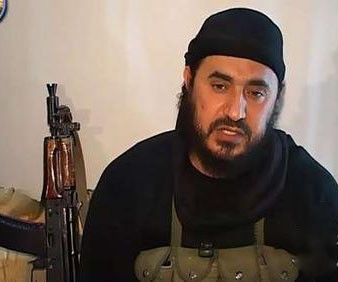
On September 26, 2008, the U.S. District Court for the District of Columbia ruled that Syria "supported, protected, harbored, and subsidized" the Iraq-based terrorist group headed by Abu Mus'ab al-Zarqawi (above), thus being culpable for the beheading of two U.S. contractors by this group.
Until now, with the exception of sanctions, financial designations, and periodic cross-border direct action, Washington has imposed little cost on Damascus for its consistent support for terrorist attacks in Iraq since the 2003 war. And while the financial implications of this court verdict are unlikely to change Damascus's standing support for terrorism, it will impose an unprecedented price on Bashar al-Assad's increasingly reckless regime.

Support for the Insurgency

In December 2010, U.S. counterterrorism officials reported an uptick in the number of insurgents entering Iraq via Syria.[2] It was the most significant reference to a Syrian role in the movement of jihadists since December 2009 when Iraqi prime minister Nouri al-Maliki blamed Damascus for car bomb attacks that killed more than one hundred in Baghdad. But it was only the latest in a long series of U.S. complaints about Syrian provision of support to Iraqi insurgents, a development that started even prior to the 2003 U.S.-led invasion. Indeed, as Washington was surging troops to the region in 2003 in preparation for the blitz on Baghdad, Damascus was deploying its own counter-force to fight the Americans.
In the months leading up to the invasion, the Assad regime allowed the establishment of an office across the street from the U.S. embassy in Damascus where insurgent hopefuls could sign up and get on a bus to Baghdad for the opportunity to repel the invaders.[3] While brazen, Damascus's support and encouragement for Washington's enemies in Iraq came as little surprise. From the very start, Syria made no secret of its intent to undermine the U.S. invasion. Just days after the start of military operations, for example, then-Syrian foreign minister Farouq Shara publicly announced that "Syria's interest is to see the invaders defeated in Iraq."[4]
The defeat of the U.S. project in Iraq was an interest Damascus shared with Tehran. So much so that, according to then-Syrian vice president Abdel Halim Khaddam, on the eve of the invasion, the two countries forged an agreement to encourage "resistance" against U.S. forces in Iraq.[5]
The Assad regime also took other steps including recruiting local staff—such as the Aleppo-based militant Islamist cleric Abu al-Qaqa—to help organize the infiltrations across Syrian territory.[6] To ensure that these dangerous Islamists did not plant domestic roots that might threaten the Assad regime, Syria's security apparatus apparently documented the presence of these killers. Then-deputy secretary of defense Paul Wolfowitz displayed some of the evidence of this official Syrian complicity during testimony before the Senate Armed Services Committee in September 2003.
Holding up passports belonging to foreign fighters encountered by U.S. forces in Iraq, Wolfowitz said,
A foreigner who came into Iraq on March 24th through Syria—not a Syrian, but through Syria. The entry permit on his passport said he came to, quote, "volunteer for jihad." Here's another one, came into Iraq through Syria—same crossing point. The entry permit said, "to join the Arab volunteers." And here's a third one that came in on April 7th. [7]
Wolfowitz's statements were subsequently augmented by those of a dozen or so U.S. Central Command (CENTCOM) flag officers, also focusing on the movement of jihadists through Syrian territory and Assad regime complicity in the endeavor. In March 2007, for example, CENTCOM revealed that training camps had been established on Syrian territory for Iraqi and foreign fighters.[8]
The most prominent of these statements, however, was issued by then-U.S. commander in Iraq Gen. David Petraeus, who during testimony to Congress on September 10, 2007, presented maps illustrating Syria's pivotal role as the source of foreign fighters entering Iraq.[9] Only a week earlier, during an interview with al-Watan al-Arabi, the general described how Syria allowed thousands of insurgents to arrive at Damascus International Airport and then cross the Iraqi border.[10] These foreign fighters, he explained, supplied the main manpower pool for the majority of suicide bombings in Iraq. That same month, the centrality of Syria to the insurgency was corroborated by the Sinjar documents, a trove of al-Qaeda materials captured by U.S. forces in Iraq.[11]
Syrian conduct during the war—in particular the state's burgeoning support for and tolerance of al-Qaeda's transit—came as a surprise to many. After all, following September 11, 2001, Damascus provided intelligence on al-Qaeda to Washington that helped save American lives. But Syria was playing a double game by supporting terrorists moving to Iraq while simultaneously supplying information on future attacks—outside of the Middle East—to Washington. Damascus hoped this would purchase immunity, but the gambit failed. After Secretary of Defense Donald Rumsfeld accused Syria in March 2003 of providing night vision goggles to Saddam and declared that Washington would "consider such trafficking as hostile acts and [would] hold the Syrian government accountable for such shipments,"[12] Damascus cut off the intelligence sharing.
As a Syrian foreign ministry official confided to New Yorker correspondent Seymour Hersh, if Washington had agreed to discuss these issues in a back channel, the intelligence sharing might have continued. "But when you publicly try to humiliate a country," he said, "it'll become stubborn."[13] While Damascus sought to blame Washington for the breakdown of the channel, by the time the cooperation had ceased, Syria had been actively facilitating the movement of jihadists into Iraq for months. In addition to killing U.S. soldiers and innocent Iraqi civilians, these insurgents also captured and killed dozens of U.S. civilians working in Iraq.

The Case against Damascus

Two of those American contractors executed by al-Qaeda in Iraq were Olin Eugene "Jack" Armstrong and Jack Hensley. In 2004, Thailand resident Armstrong and Hensley, who was based in Marietta, Georgia, were employed as contract managers by private construction subcontractors in Iraq. The two were kidnapped from their residential housing in Iraq on September 16 of that year. On September 20 and 21 respectively, videos documenting the gruesome beheadings of Armstrong and Hensley were posted on an online web forum associated with al-Qaeda in Iraq leader Abu Mus'ab al-Zarqawi.[14] Remains of the victims were found in Baghdad soon after.
In August 2006, the families of Armstrong and Hensley brought a civil action against the government of Syria, President Bashar al-Assad, Syrian military intelligence, and its director, Assif Shawkat. The action, launched by the estates of Armstrong and Hensley—under the name of estate administrator Francis Gates—alleged that Damascus "provided material support and resources" to al-Qaeda in Iraq and sought economic damages, compensation for grief, pain, and suffering, and punitive damages arising from their deaths.[15]
A three-day evidentiary hearing was held in January 2008 to establish the facts of the case. Four American expert witnesses testified how Syria facilitated the movement of jihadists to Iraq, how the Assad regime provided support and sanctuary to the Zarqawi network, and how the regime—and specifically the president and his brother-in-law, military intelligence chief Shawkat—were aware of the activities of Zarqawi and al-Qaeda.[16] The government of Syria neither answered the suit nor appeared in court.
On September 26, 2008, the U.S. District Court for the District of Columbia issued its memorandum opinion. In her ruling, Judge Rosemary Collyer wrote,
Plaintiffs proved, by evidence satisfactory to the Court, that Syria provided substantial assistance to Zarqawi and al-Qaeda in Iraq and that this led to the deaths by beheading of Jack Armstrong and Jack Hensley. … The evidence shows that Syria supported, protected, harbored, and subsidized a terrorist group whose modus operandi was the targeting, brutalization, and murder of American and Iraqi citizens.[17]
Most importantly, in her ruling, Judge Collyer concluded that consistent with precedent, Damascus could in fact be held liable for damages pursuant to the Foreign Sovereign Immunities Act (FSIA).[18] Under the international principle of sovereign immunity, U.S. courts have no jurisdiction over foreign states aside from certain enumerated exceptions codified by a U.S. federal statute in the act. Cases of state-sponsored terrorism are one exception. As of January 28, 2008, U.S. law "waives sovereign immunity for states that sponsor terrorism and provides a private right of action against such states."[19] Because Assad and Shawkat were not individually served with the action, the court ruled that they would not be defendants.
Based on this ruling, the court awarded damages requested by the Armstrong and Hensley estates. In terms of economic damages—lost income incurred by premature death—the compensation was relatively low, slightly over $1 million each. However, the especially cruel and prolonged technique of execution—and the resultant suffering of the victims and surviving family members—produced substantial damages awards. Most significant were the pain and suffering and punitive damages, which were especially high "in hopes that [these] substantial awards will deter further Syrian sponsorship of terrorists."[20] The court awarded to each family $50 million for pain and suffering, and $150 million for punitive damages. All told, the civil judgment against Syria totaled $413,909,587.

The Syrian Line of Defense

Although the mammoth judgment did not get much attention in the U.S. media, Damascus clearly took note of the award.[21] On October 24, 2008—less than a month after the initial ruling—it filed a notice of appeal. In its effort to overturn the ruling, the government of Syria engaged Johnson administration attorney general Ramsey Clark as its counsel.[22]
Retention of Clark by the Assad regime was not very surprising. Clark has a prodigious record of defending publicly reviled individuals and causes. His clientele list is a veritable "Who's Who" of dictators and perpetrators of genocide that includes Radovan Karadžić, Slobodan Milosevic, Saddam Hussein, and Elizaphan Ntakirutimana (first member of the clergy to be convicted of genocide by the International Criminal Tribunal for Rwanda). Perhaps of more relevance to this case, in the early 1990s, Clark defended the Palestine Liberation Organization in the suit brought by the family of the murdered American Leon Klinghoffer.
The appeal motion did not address the allegations of Syrian material support to terrorists who killed Americans. Rather, it centered largely on two jurisdictional matters. The first of Syria's arguments was that the case should be dismissed because "no service of process has been delivered by DHL [international delivery company] to Syria and no legally sufficient showing of service of process has been made." Indeed, according to the appeal brief, the signature documenting receipt by the Foreign Ministry in Damascus of the package alerting Syria of the legal action "could have been photocopied from an earlier signature … and could readily have been the product of manipulation and falsification." In any event, the brief continued, DHL is unreliable and "the Internet is rife with anguished, indignant complaints by DHL customers."[23]
Damascus conceded that "Essam" was in fact the name of the person who typically signs for packages at the Foreign Ministry, but it maintained that DHL perpetrated fraud to cover-up incompetence and that the government of Syria was never aware of the suit. While Syria's DHL conspiracy theory was entertaining, indications suggest the court will not find the explanation compelling.
More interesting was Clark's second argument as to why the case should have been dismissed or remanded to the district court. Syria argued that the terrorism exception to sovereign immunity that allowed the action to be brought was unconstitutional "because it gives the Executive and Legislative branches incentive and opportunity … to misuse the exception to deny equal sovereignty for political purposes."[24] Most recently, the brief noted, these branches terminated cases and undermined the judiciary's independence with regard to Libya.
In addition to expressing concerns about preservation of balance of powers in the United States, Syria argued that by singling out the state, the suit violated article II of the U.N. charter, which, Syria said, establishes the principle of "sovereign equality of all [U.N.] Members." "By force of the U.S. Secretary's designation [of Syria as a state sponsor of terrorism]," the brief laments, Syria is "deprived of its fundamental right of equal sovereignty."[25]
Worse, the brief continued, the enormous judgment—which Syria described as "economic warfare"—would only "further inflame anti-American passions [and] invite retaliation."
The near half a billion dollars in damages and penalties assessed against Syria for the deaths of two Americans in this case … can only fill Syrians and most of the rest of the world with wonder at the monetary demands U.S. laws place on American deaths and America's non-accountability for the lives it takes. With a gross domestic product per capita of $7,000, it would take 30,000 years for the average Syrian to earn the sum awarded for the death of one American in this case.[26]
In short, the Assad regime argued that the mammoth judgment leveled against Syria by the U.S. District Court with the expressed purpose of not letting "depraved lawlessness go unremarked and without consequence" will only result in Arabs hating Americans more.[27] Consistent with the long-standing Damascus modus operandi, Syria's lawyers essentially threaten violence against the United States unless the initial verdict is reversed.

Precedents

Notwithstanding the seeming novelty of the defense's strategy—attacking the constitutionality of the Foreign Sovereign Immunity Act exception for state sponsors of terrorism—Damascus and Clark are employing this tack in other cases. During another recent civil action, two Americans taken hostage in 1988 by the Syrian-supported Kurdistan Workers Party (PKK) sought damages against Damascus for its provision of material support to the terrorist organization.[28] In this case, too, the U.S. District Court for the District of Columbia did not accept Damascus's argument that the terrorism exception was unconstitutional.
At the time of publication, the appeal verdict was pending, but judgments in several previous cases suggest that the Court of Appeals will affirm precedent and deny Syria's argument that the FSIA exception is unconstitutional, just as it has previously found that the U.N. charter is not self-executing and has no jurisdiction in U.S. courts.
Syria is only the latest state to be held accountable in U.S. courts for its role in killing Americans. Most famously, in 1998, the family of Alisa Flatow, who was killed in a bus bombing perpetrated by the Palestinian Islamic Jihad, won a $247 million award from the group's Iranian sponsors. But significant judgments have also been rendered against Tehran for kidnappings, tortures, and murders perpetrated in Lebanon by its client Hezbollah and in Israel by Hamas. In 1997 and 2010, nearly $4 billion in civil judgments were rendered against Iran in U.S. courts by the victims of the 1983 Marine barracks bombing in Lebanon. Likewise, in 2007, U.S. courts awarded $6 billion to six American families and UTA airlines after Libya was found responsible for downing Flight 772 by a bomb over Niger in 1989. Ultimately, the UTA settlement was folded into the $1.5 billion fund established by Libya in 2008 to compensate Lockerbie, La Belle, and all other pending terrorism claims against Libya.[29]
While these astronomical figures would optimally constitute a deterrent for terrorist regimes, regrettably they have not proven effective. The problem, obviously, is that the judgments are exceedingly difficult to collect. After a $1.3 billion judgment was levied against Iran in 2010, U.S. District Court Judge Royce C. Lamberth calculated that more than $9 billion in uncollected torts had been ordered against Tehran, a sum that made the money a "meaningless charade."[30] Federal courts have frozen some Iranian funds, including a $2 billion account at Citibank.[31] Still other victims of Iran have sought, thus far unsuccessfully, to attach ancient Iranian artifacts in Chicago museums.[32]
As with Iran, wresting assets from Syria to satisfy the awards to the Armstrong and Hensley families will also prove a challenge. Damascus has relatively few assets in the United States, and diplomatic property is inviolable. Still, attorney Steven Perles, who represented the families, remains optimistic. To date, according to his assessment, he has recovered some $70-$75 million in frozen Iranian assets for his clients.[33] And should the verdict be upheld, he says he intends to focus on Syrian assets in Europe "where a number of countries recognize compensatory [if not punitive] damages from American courts." While compensation remains a distant prospect, as long as these judgments are pending—if Iran is any example—it may become increasingly difficult for Damascus to do business in Europe.
In any event, it is increasingly clear that because the Assad regime has contributed to so many American deaths in Iraq and elsewhere in the region, this lawsuit is sure to generate dozens more. Indeed, Perles himself has pledged to "financially pound the Syrians until they do what [Libyan leader] Qaddafi did and compensate the families for the deaths of their loved ones."[34] More suits against Damascus await.

Policy Implications

The $413 million civil judgment represents the latest in a growing series of irritants in the U.S.-Syrian relationship. Since 1979, when Syria was added as an inaugural member of the State Department list of state sponsors of terrorism, U.S. relations with Damascus have never been good. Nevertheless, despite the pariah moniker, over time, relations between Washington and the terrorist state reached a condition of normalcy. This persisted until the Bush-era deterioration triggered by Syrian provision of assistance to insurgents in Iraq and the subsequent assassination of former Lebanese premier Rafiq Hariri in 2005, a murder widely believed to have a Syrian connection.
Despite the Obama administration's sincere efforts to reset the relationship, improve the ties via a more active program of diplomatic engagement, and split Syria from its 30-year strategic relationship with Iran, over the first two years of this presidency, the bilateral dynamic has only gotten worse. Since 2010, Washington has watched Syrian support for terrorism and meddling in Lebanon increase. Meanwhile, Assad regime coordination with Tehran appears to be on the upswing.
An early item on President Obama's agenda was the appointment of a new ambassador to Damascus, a post that had been vacant since the Hariri killing. In February 2010, Robert Ford was appointed to the post, but his confirmation was scuttled when President Assad hosted Iran's president Mahmoud Ahmedinejad and Hezbollah leader Hassan Nasrallah for a trilateral meeting in Damascus on February 26.[35]
Ford was given a recess appointment at the end of 2010 congressional term and was dispatched to Syria in January 2011.[36] But it is unclear what he will be able to accomplish. In the face of two years of good will gestures by the Obama administration, Syria has provided increasingly lethal and destabilizing support to Hezbollah, believed to include SCUD and/or Fatah 110 missiles, and perhaps game-changing MANPAD systems, which can target Israeli F-16s over Lebanon. In addition to providing ongoing training to Hamas in Syria, recently released State Department cables suggest the presence of Hezbollah military facilities on Syrian soil.[37] At the same time, Damascus continues its policy of noncooperation with the International Atomic Energy Agency investigation of the North Korean nuclear facility in al-Kibar destroyed by Israel in 2007.[38] Finally, the human rights situation in Syria remains appalling and shows no signs of improving.[39]
This $413 million judgment joins the perennial catalogue of U.S.-Syrian issues for discussion. And although it is unlikely to become a priority issue, the outstanding award does serve an important purpose on the list. For unlike the other items—which pose a concern for regional stability and a threat to regional friends—the pending damages highlight that Syria's behavior is not just a problem for other states but for Washington.
While it is possible that this Syrian obligation will ultimately be met through a Libya-style arrangement where the Assad regime jettisons its support for terrorism, ends its quest for nuclear weapons, and changes its strategic orientation in exchange for a rapprochement with Washington, this kind of deal remains a distant hope at best. In the meantime, the Gates v. Syria verdict is a useful reminder that Syrian support for terrorism kills Americans.
David Schenker, the Aufzien fellow and director of the Program on Arab Politics at the Washington Institute for Near East Policy, previously served as the Pentagon's top policy aide on the Arab countries of the Levant.

Tuesday, May 3, 2011

Osama killed but Hezbollah increasing its power in Lebanon

Posted on | mei 3, 2011 |

While millions of Americans are celebrating the killing of the world’s Number One terrorist, Osama bin Laden, the global war on terrorism is far from over. Intelligence reports coming out of Israel and Lebanon reveal some disturbing events taking place in Lebanon.

Since the Second Lebanon War in 2006, Hezbollah has increased its power in munitions and number of operatives with tens of thousands of weapons stored in civilian villages throughout southern Lebanon, a direct violation of UN Resolution 1701, according to an Israeli Defense Force intelligence report.


read more: http://www.nl-aid.org/continent/middle-east/osama-killed-but-hezbollah-increasing-its-power-in-lebanon/

Saturday, April 30, 2011

Hamas leadership to relocate from Syria to Qatar

  • Published 08:59 30.04.11

  • After years in exile in Damascus, the Hamas political leadership, headed by Khaled Meshaal, will leave the Syrian capital for the Arab emirate city just days after historic Fatah-Hamas reconciliation deal.

    By Haaretz  
      Hamas' Syria-based leader, Khaled Mashaal and other senior Hamas officials are planning to relocate from Syria to the Arab emirate city of Qatar, Army Radio reported on Saturday.

    Quoting London-based Arab daily Al-Hayat, Army Radio reported that Qatar had agreed to host the leaders after Egypt and Jordan denied the request, but refused to host the party's military leaders.


    Khaled Meshal AP June 2010 Hamas' exiled political chief Khaled Meshal
    Photo by: AP


    More than 15 members of Hamas's Political Bureau have been operating in exile in Damascus since 1999.
    According to the report, Hamas' military echelon will relocate to the Gaza strip. There was no mention of a reason for the relocation, which will come just days after Hamas and the leading West Bank party Fatah signed an historic reconciliation deal.

    On Wednesday, Palestinian President Mahmoud Abbas' Fatah movement hammered an historic reconciliation deal with the rival Hamas group, agreeing to form an interim government and fix a date for general election within the year.

    The deal, which took many officials by surprise, was thrashed out in Egypt and followed a series of secret meetings.

    Hamas leader Mahmoud Zahar insisted that Hamas was united in its move toward a unity government, however, it is still unclear how widespread that agreement is.

    Abbas has been making a heavy push for reconciliation with Hamas, with which it held a unity government that collapsed during a five-day civil war in 2007 and ended with the Islamic militant group seizing power in the Gaza Strip. Fatah had already signed the reconciliation agreement in October 2009, but Hamas had until now refused to give up on demands it had set before the rival group.

    Restoring Palestinian unity is seen as crucial to reviving any prospect for a Palestinian state based on peaceful co-existence alongside Israel. Fatah, the mainstream Palestinian movement until a 2006 election victory by Hamas, backs negotiated peace but the Islamists reject it.


    http://www.haaretz.com/news/diplomacy-defense/report-hamas-leadership-to-relocate-from-syria-to-qatar-1.358956

    Saturday, April 23, 2011

    The Truth About Iran’s Support of Arab Terrorists

    When it comes to Shia and Sunni, Islamism knows no sect.
     
    April 23, 2011 - by Brian Fairchild


    On April 15, 2011, a prominent news story described Iran’s support for Syria’s draconian crackdown on protestors. The story focused on Iran’s widespread meddling in the region, but it missed the key point: Shia Iran’s closest ally in the Middle East is Sunni Syria. Iran deals freely with Sunni Muslims and Sunni countries when it’s in its interest to do so.

    Many folks can only see in black and white. As a result, contrary to a mountain of evidence, many policymakers, counterterror specialists, and citizens continue to believe that there is no cooperation between Sunni and Shia because of religious hatred.

    While it is true that, on the local level, Sunnis and Shias routinely attack and kill each other in places like Iraq, Pakistan, and Yemen, it is equally true that, on the strategic level, Shia Iran’s closest ally in the Middle East is indeed Sunni Syria; that Iran supports all the major Sunni terrorist organizations; and that Iran is planning to re-establish formal diplomatic relations with Sunni Egypt after more than 30 years.


    Full story: http://pajamasmedia.com/blog/the-truth-about-iran%e2%80%99s-support-of-arab-terrorists/

    PJM Exclusive: Video from Syria’s ‘Great Friday Uprising’ (Content Warning)

    Five videos from today's massacre, with translation and commentary (three are currently exclusive to PJM among English-language media): "As an American with Syrian roots, I want the American people to witness the horror of the Assad regime."
    Update: Additional video added Saturday, 8:45 a.m. EST. We will continually update as videos arrive. Don't miss Roger L. Simon: "Syria: What PJM Is Doing".
    April 22, 2011 - by Farid Ghadry


    Syrian security forces, positioned on rooftops, have been picking off unarmed civilian demonstrators with live hollow-point ammunition using high-precision rifles. The Hague Convention of 1899, Declaration III, prohibits the use in warfare of bullets that easily expand or flatten in the body.

    —————————————————————————————————————————
    Izrah’ (near Dara’a, in southeastern Syria):
    A father carries a dead, or dying, child — later identified as ten-year-old Iyad Awad Shehab — who has been shot in the head. The child’s brother screams “Akooya (my brother).”

    The videographer pans to show a chaotic situation. People shout “Car!” — a car is approaching down the road to spray them with bullets. The videographer is heard calling out to god:


    See videro: http://pajamasmedia.com/blog/pjm-exclusive-video-from-syrias-great-friday-uprising-content-warning/